SHINTA OBONG
( ss/24)
“Stories travelled across borders and took new forms through time,
becoming part of traditions that continue to evolve.”
The Silk Road was more than a route of trade
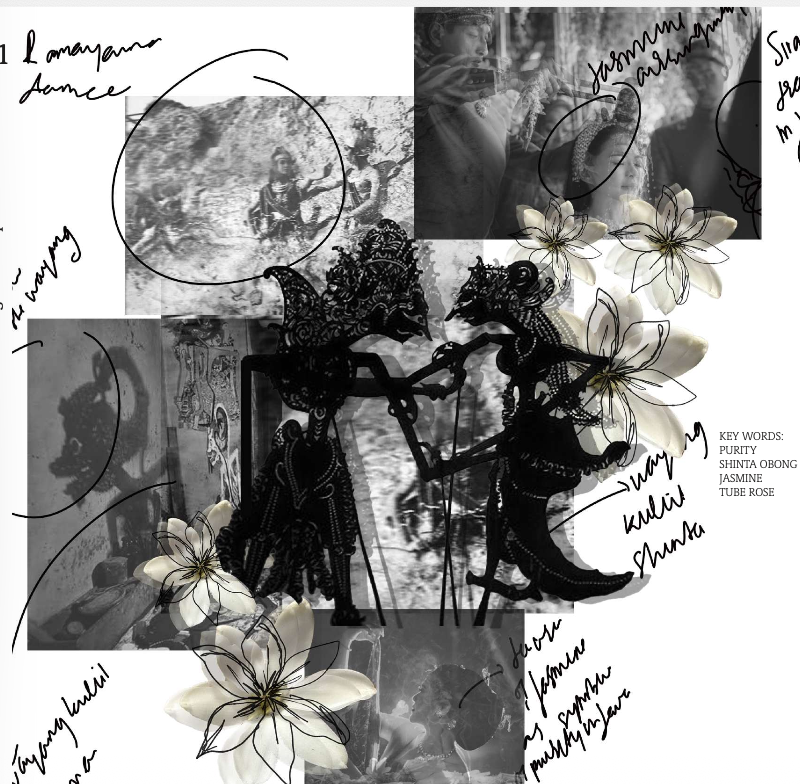
It carried stories, beliefs, and traditions across places and time. Through these exchanges, the Ramayana arrived in Indonesia and gradually became part of Javanese culture. Across generations, the story found new forms of expression through wayang kulit, where narratives are not only told but revealed through shifting light, moving shadows, and quiet moments of transformation.t
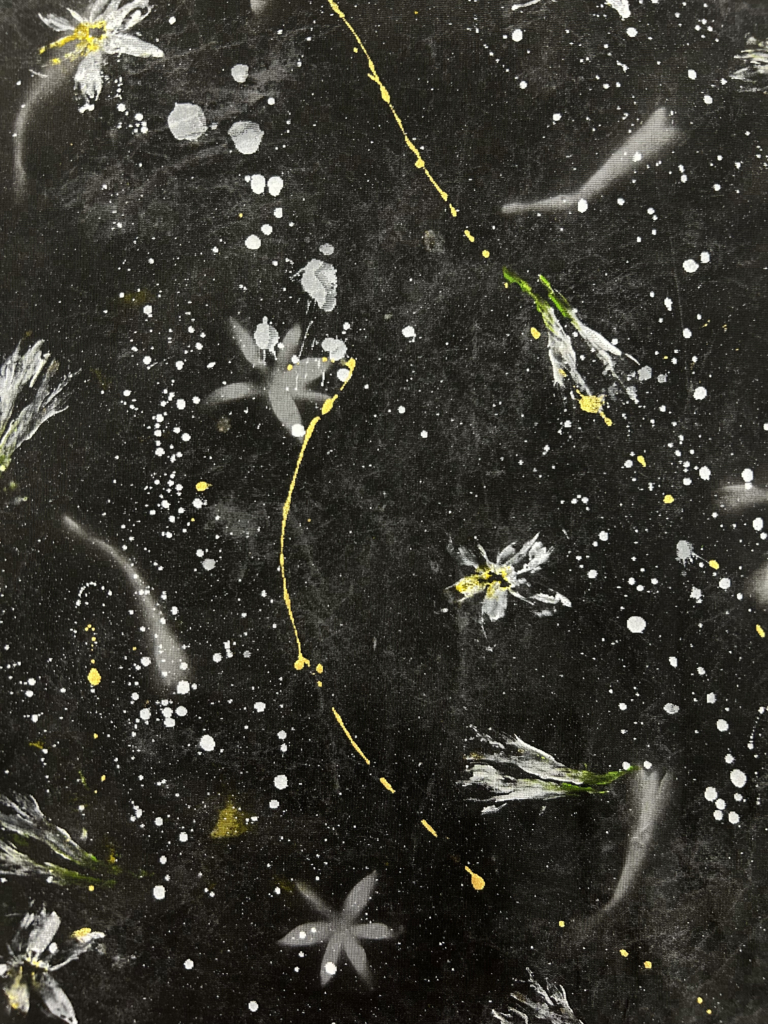
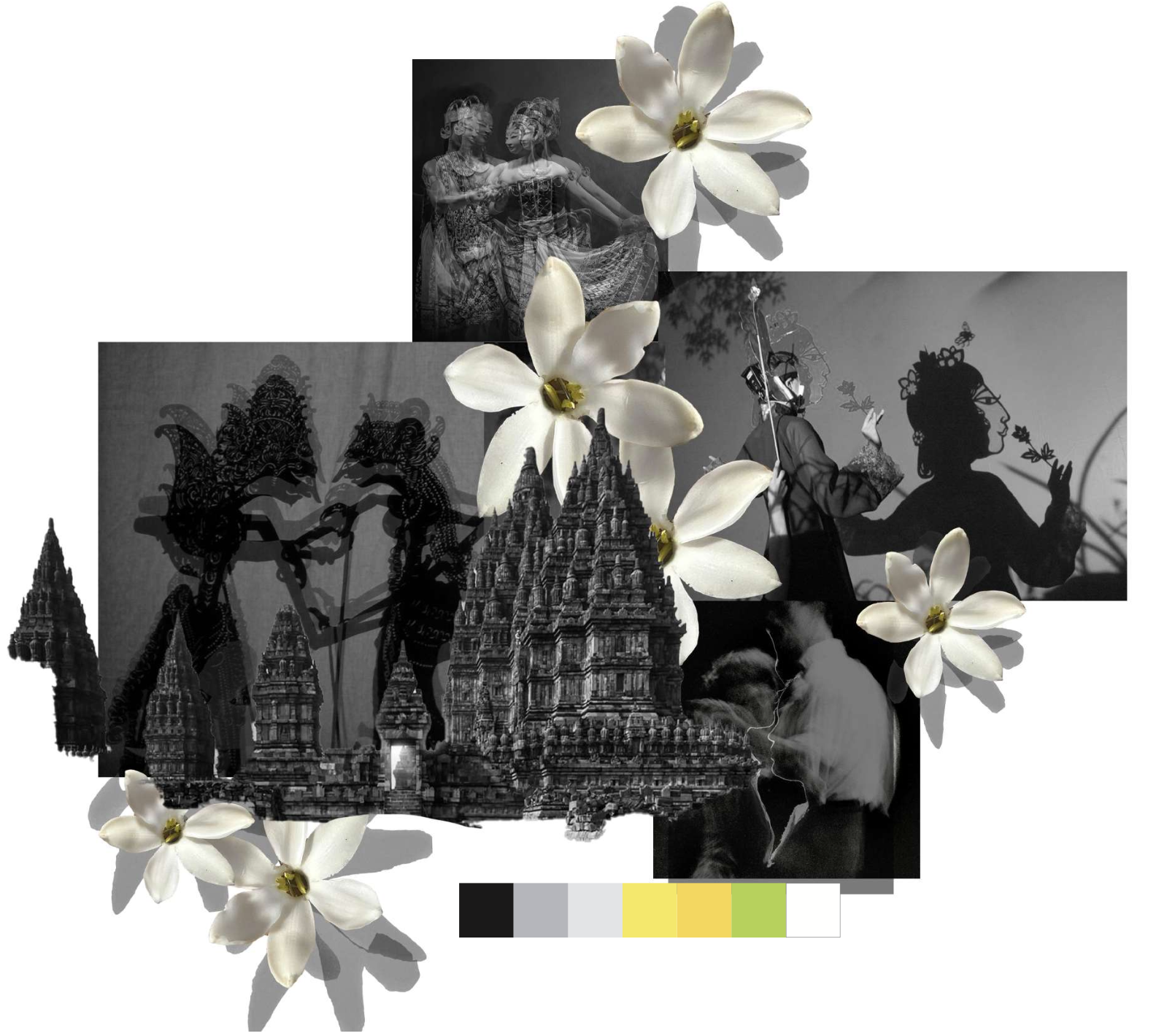
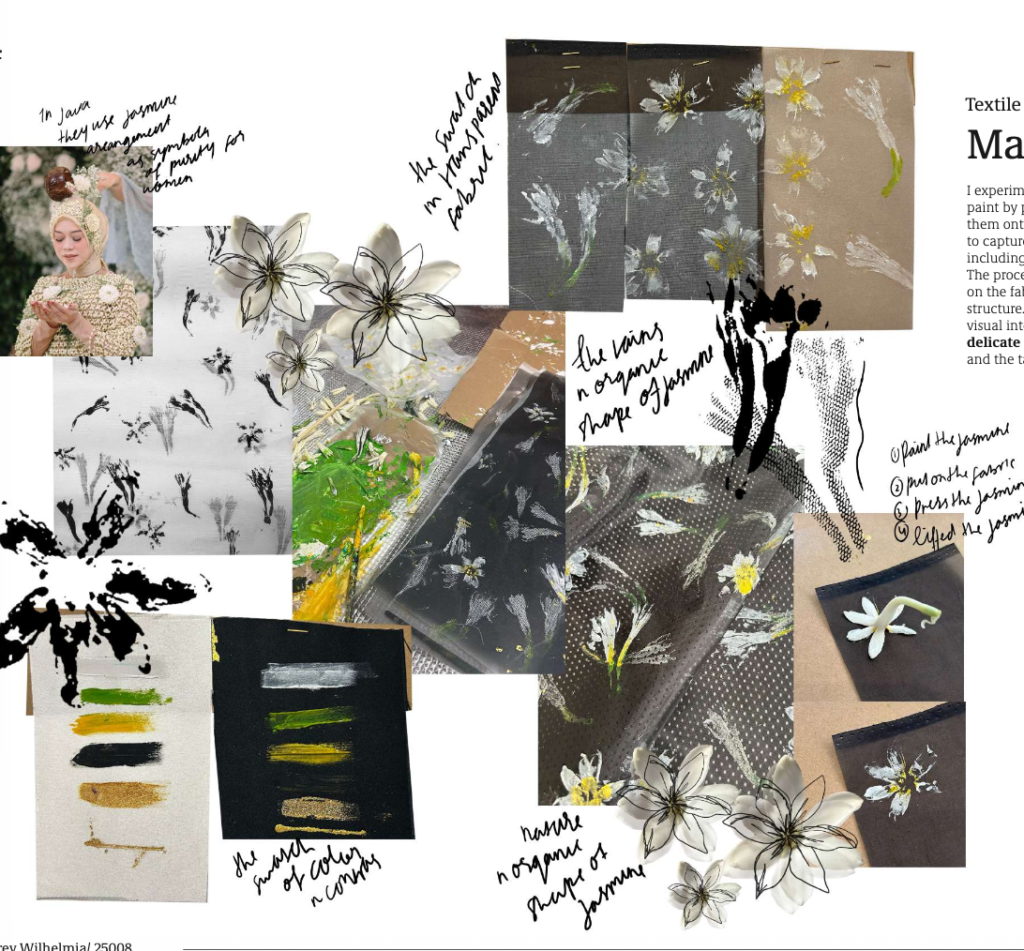
At the centre of this collection is Sinta Obong—the moment Dewi Sinta enters the fire to prove her purity. Rather than representing destruction, fire becomes a passage: a moment of endurance, devotion, and transformation. Within this interpretation, jasmine and tuberose appear throughout the collection as representations of Sinta herself. In Javanese culture, both flowers are closely associated with purity, becoming symbols of her grace, sincerity, and quiet strength.
This narrative continues through the visual world of wayang kulit. Illuminated by the blencong, the traditional flame used in performance, shadows begin to move, appear, and disappear. Smoke drifts into darkness while silhouettes emerge against light.
These fleeting moments became an important starting point for the collection—capturing the atmosphere where transformation becomes visible and stories unfold through shadow.
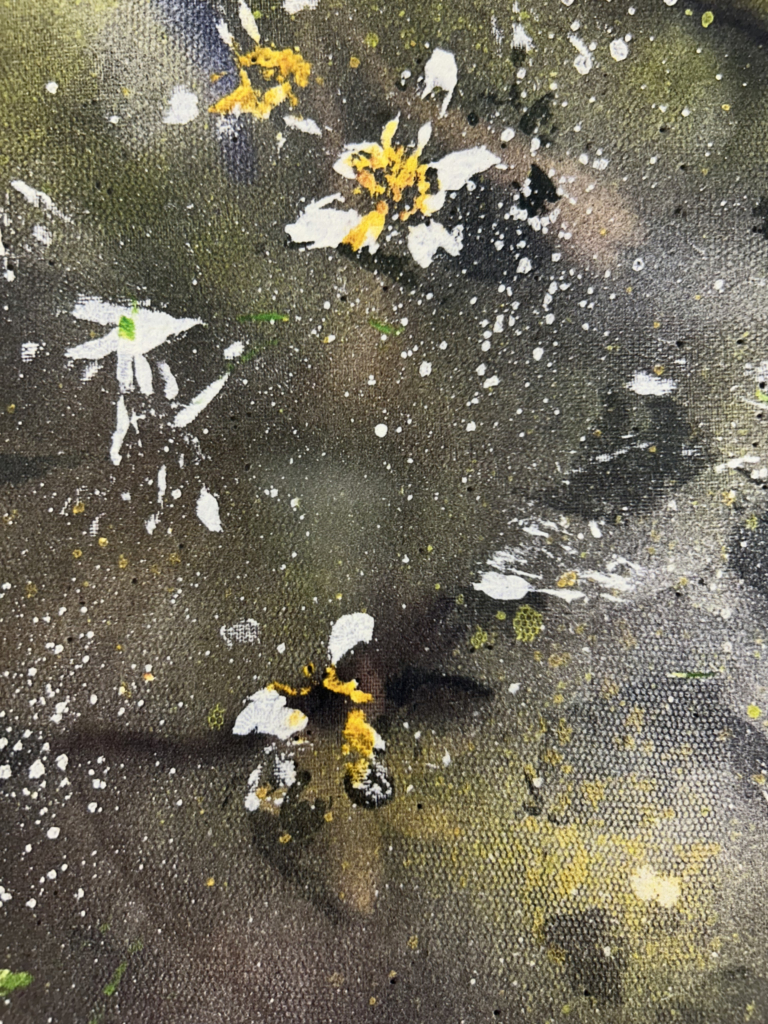
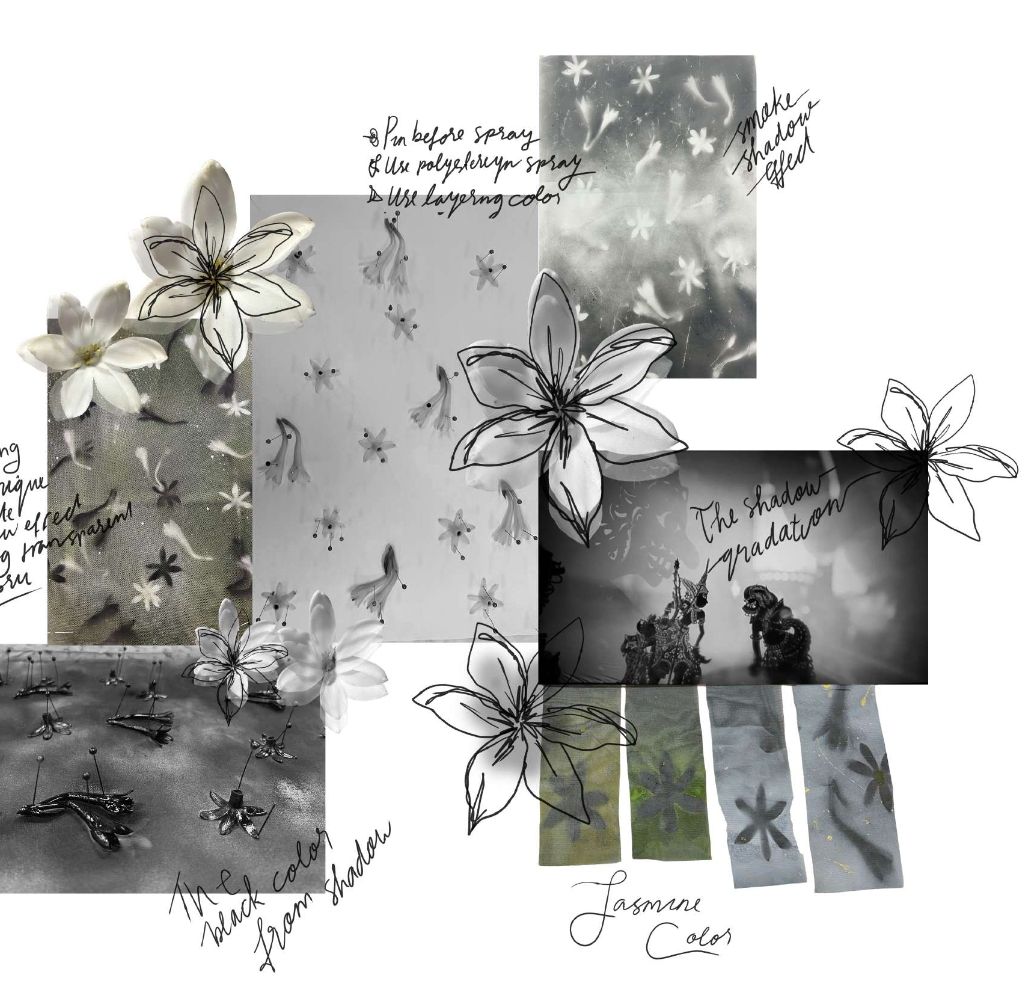
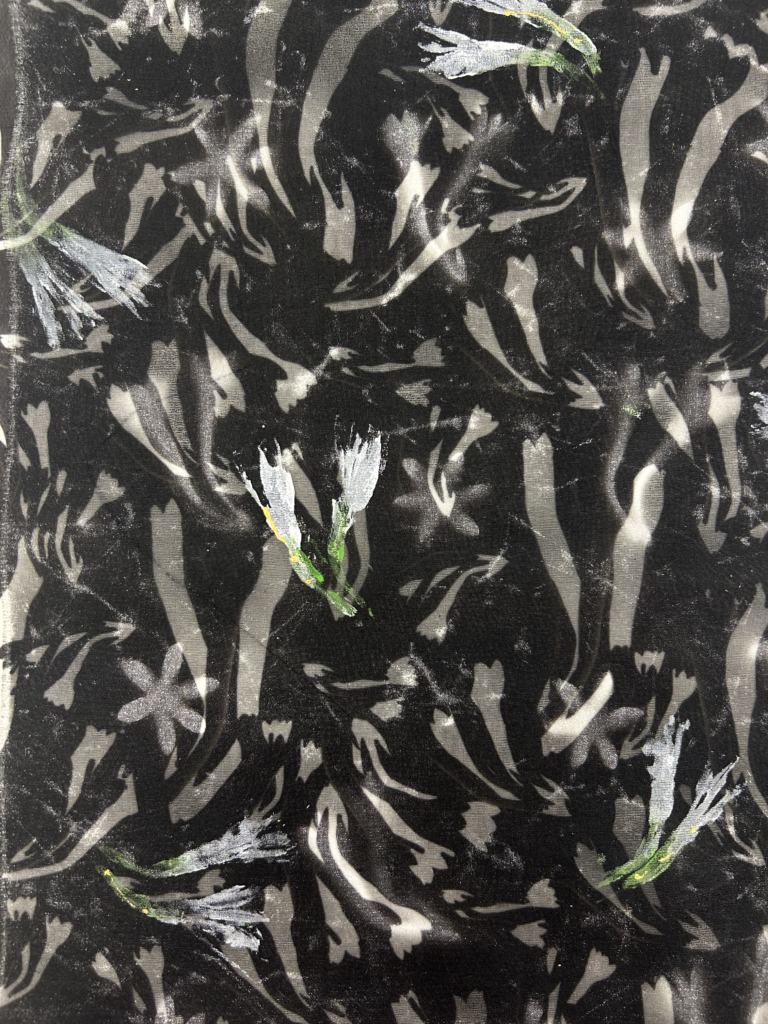
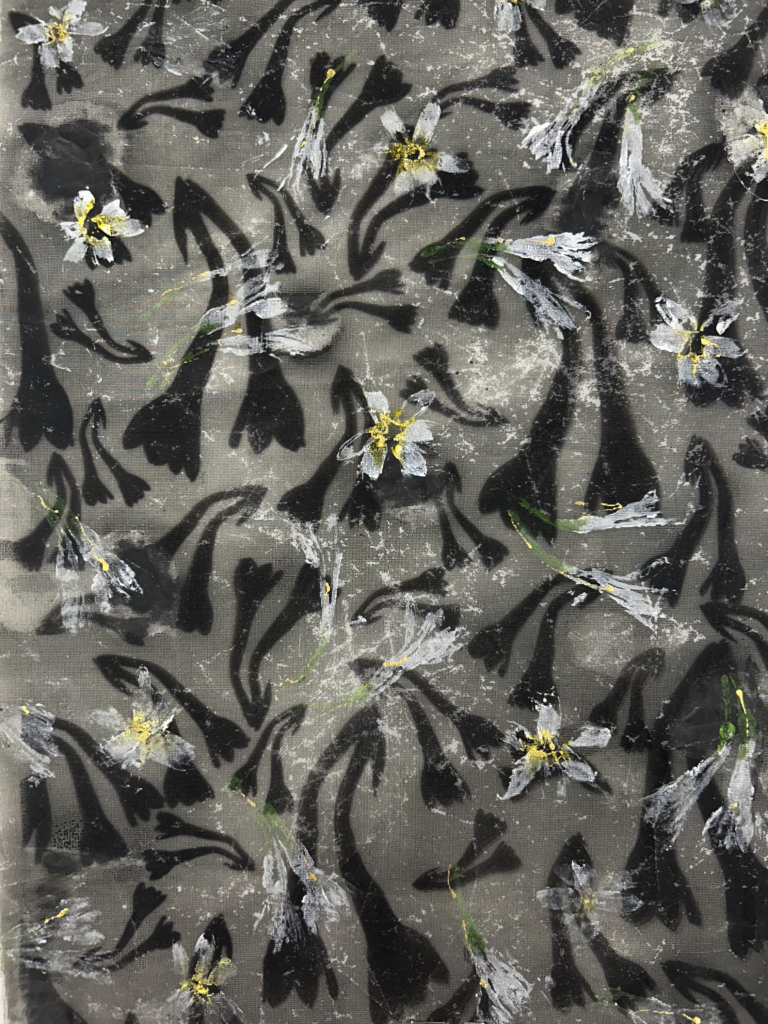
These impressions are translated into textile through spray dye and direct mark-making techniques. Real jasmine and tuberose flowers are placed onto fabric and sprayed over, leaving behind soft traces that resemble fading shadows and drifting smoke. Floral forms are also pressed directly onto the surface to preserve their organic textures and delicate details, allowing each layer to carry a memory of the process itself.
Layered onto translucent organza, these surfaces create movement across the body—appearing and dissolving as light changes. The collection becomes a meeting point between cultural memory and contemporary textile expression, where flowers become symbols of Sinta, shadows become material, and stories continue to move beyond time.